
5 Steps to Developing Effective Standard Operating Procedures
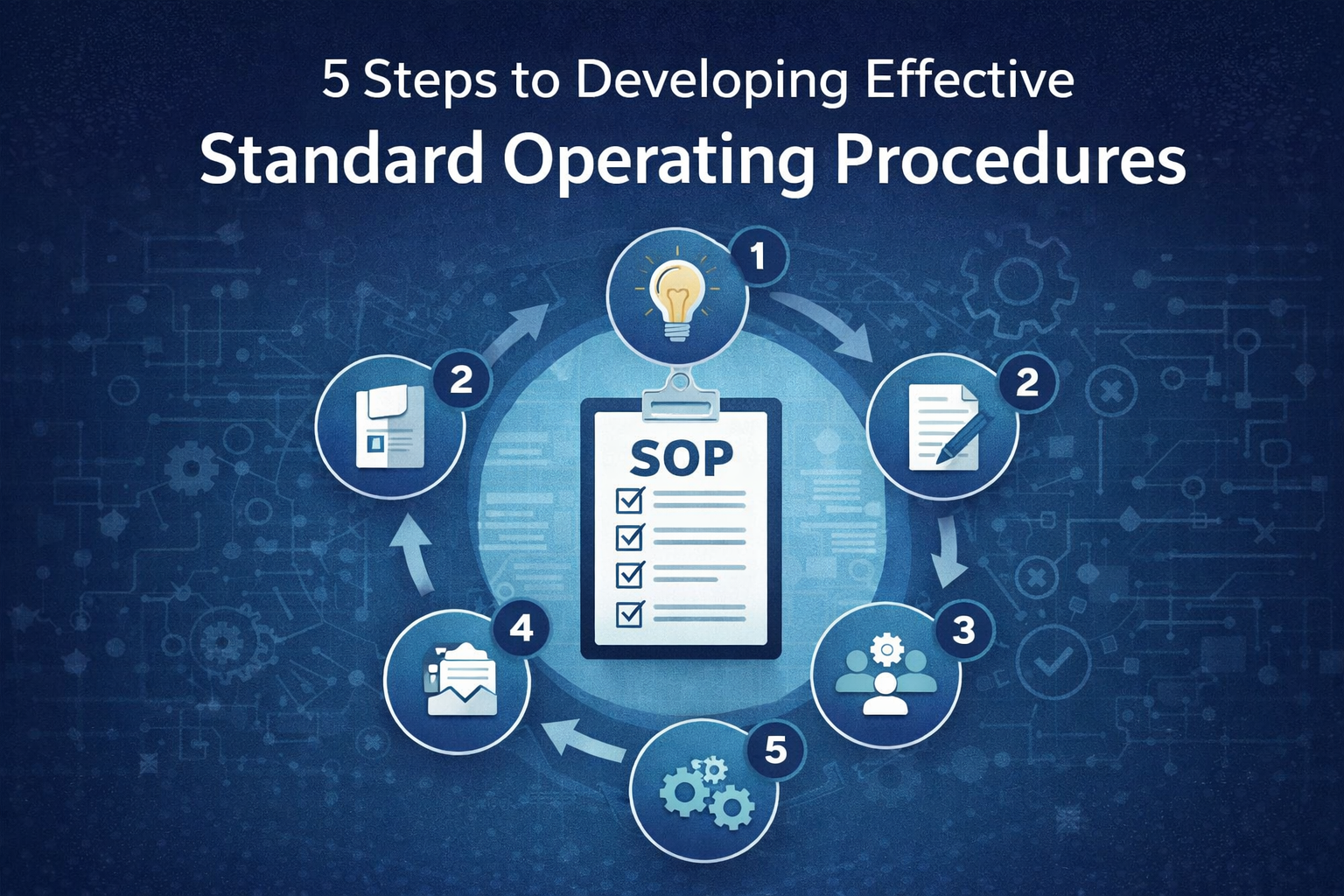
5 Steps to Developing Effective Standard Operating Procedures - Quality Document Solutions
To develop effective standard operating procedures (SOPs), a business should document how work is actually performed, define each step clearly, identify decision points, and standardize how tasks are completed across the team.
Clear SOPs improve operational consistency, reduce errors, and make training more efficient—especially as a business grows.
The following steps provide a practical framework for creating SOPs that reflect how your business actually operates and support consistent execution.
1. Identify the Right Processes to Document
Start with processes that:
• are performed frequently
• impact customers or outcomes
• involve multiple steps or handoffs
These areas benefit most from clarity and consistency.
2. Capture How Work Is Actually Performed
Avoid documenting how processes are supposed to work.
Instead, observe and document how they are currently being executed.
This ensures accuracy and usability.
3. Break the Process into Clear Steps
Each procedure should be:
• sequential
• specific
• easy to follow
Avoid vague language. The goal is clarity, not complexity.
4. Define Roles and Responsibilities
Clearly identify:
• who performs each step
• who reviews or approves
• where handoffs occur
This eliminates confusion and improves accountability.
5. Keep It Practical and Maintainable
SOPs should be:
• easy to update
• accessible to your team
• aligned with how work evolves over time
If documentation becomes outdated, it loses its value quickly.
Closing
Effective SOPs are not about creating more documentation—they’re about creating the right documentation that your team can actually use.
Looking to bring more structure and consistency to your business?
Schedule a Consultation