
10 Essential SOPs Every Business Should Have
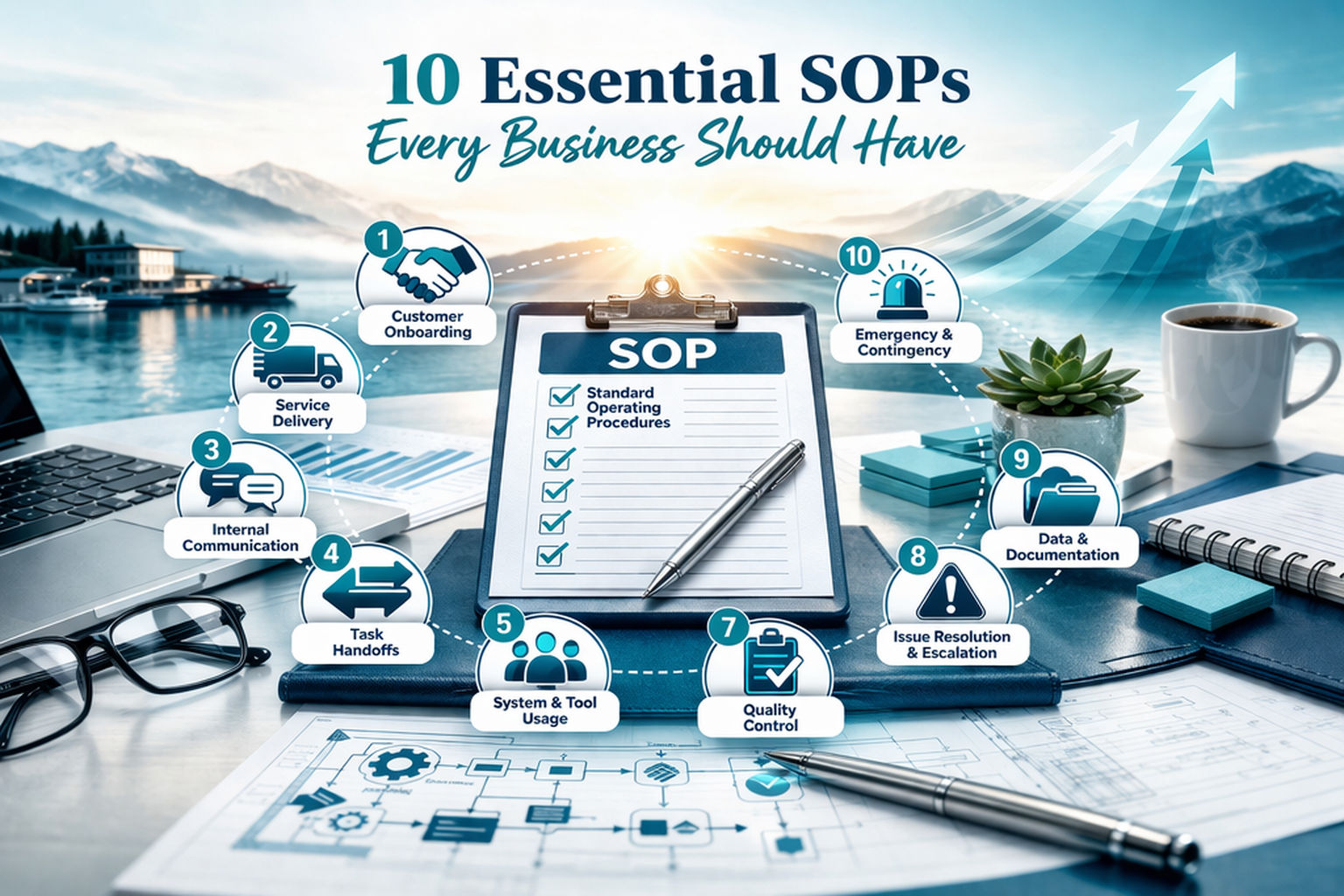
10 Essential SOPs Every Business Should Have - Quality Document Solutions
Every business should have standard operating procedures (SOPs) in place for its most critical workflows, including onboarding, customer service, financial processes, and daily operations. These essential SOPs ensure tasks are performed consistently, reduce errors, and make it easier to train employees and scale the business.
Without clearly defined procedures, teams rely on memory and individual habits, which leads to inconsistency and operational risk.
The following SOPs represent the core processes every business should document to improve consistency, efficiency, and long-term stability.
1. Customer Onboarding Process
How new customers are introduced to your business sets the tone for the entire relationship.
A clear onboarding process ensures:
• consistent communication
• proper setup
• a smooth, professional experience
2. Core Service Delivery Process
This is the heart of your business.
Document how your primary service or product is delivered step-by-step to ensure:
• consistent quality
• predictable outcomes
• fewer errors
3. Internal Communication Standards
Unclear communication leads to delays, confusion, and mistakes.
Define:
• how updates are shared
• when communication is required
• which tools are used
4. Task Handoff Procedures
Many breakdowns occur between steps—not within them.
Document:
• what is handed off
• when it happens
• what “complete” looks like
5. Employee Onboarding & Training
New employees should not have to rely on memory or inconsistent guidance.
A structured onboarding SOP helps:
• reduce ramp-up time
• improve confidence
• ensure consistency from the start
6. System & Tool Usage
If your business relies on software or systems, those processes should be clearly defined.
Document:
• how tools are used
• key workflows
• common tasks
7. Quality Control & Review Process
Consistency requires oversight.
Define:
• what gets reviewed
• who reviews it
• how quality is measured
8. Issue Resolution & Escalation
When problems arise, your team should know exactly what to do.
A clear SOP ensures:
• faster resolution
• less confusion
• consistent handling of issues
9. Data & Documentation Management
Information should be easy to find, use, and maintain.
Define:
• where documents are stored
• naming conventions
• version control
10. Emergency & Contingency Procedures
Unexpected situations happen in every business.
Having documented emergency procedures ensures:
• quick response
• reduced disruption
• greater confidence under pressure
Closing
Strong operations don’t happen by accident—they are built through clarity and consistency.
By documenting these core processes, your business creates a foundation that supports growth, reduces risk, and allows your team to operate with confidence.
Looking to bring more structure and consistency to your business?
Schedule a Consultation