
How to Create an Effective Training Manual
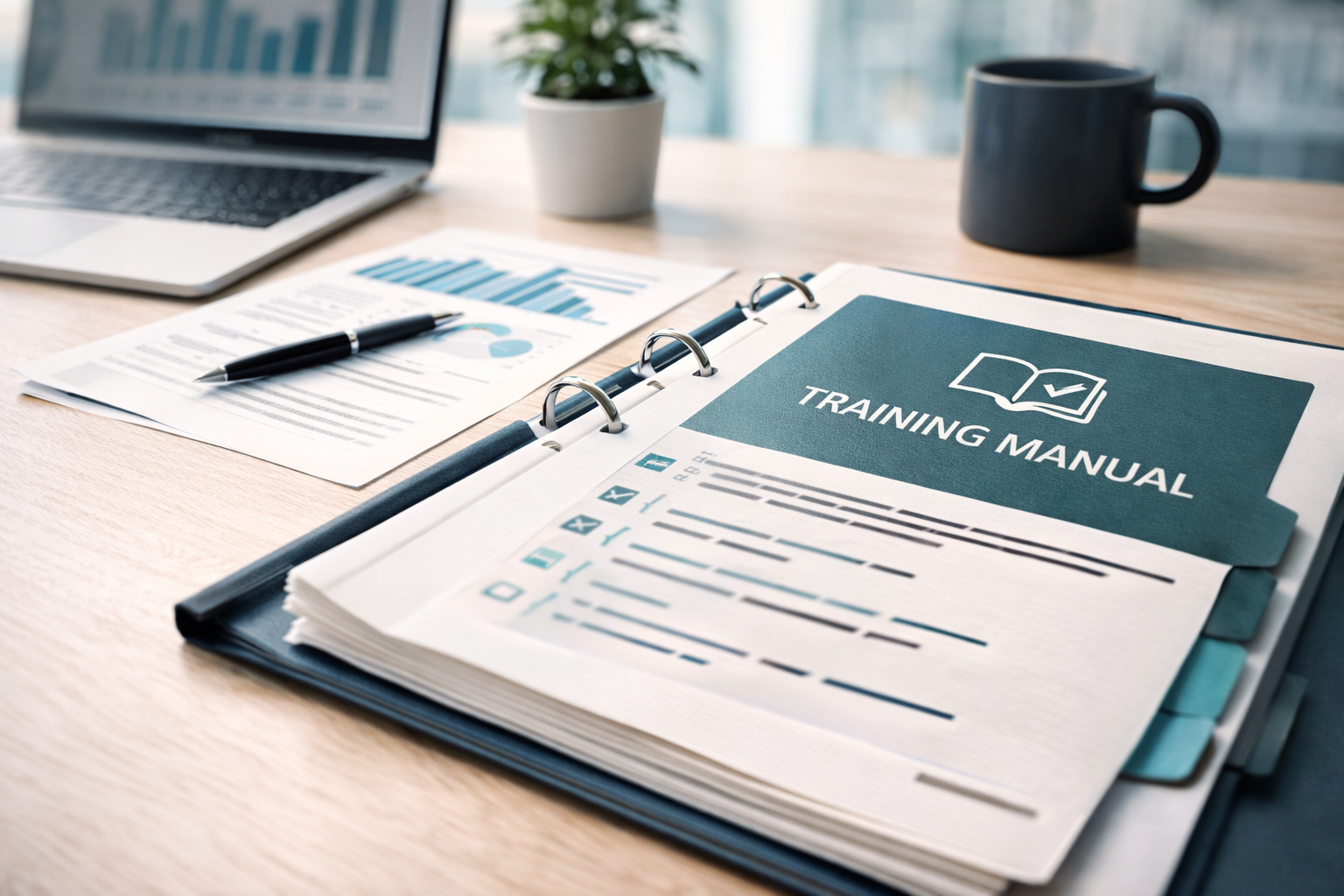
How to Create an Effective Training Manual - Quality Document Solutions
An effective employee training manual should include step-by-step instructions, system guidance, clearly defined expectations, and practical workflows that employees can follow in their day-to-day work.
Strong training materials improve onboarding, reduce reliance on verbal instruction, and support operational consistency.
The following guide outlines how to create a training manual that reflects how your business actually operates.
1. Start with the Right Scope
Before creating a training manual, define what it should cover.
Focus on:
• key roles or functions
• core systems or processes
• areas where inconsistency or errors occur
Trying to document everything at once often leads to overly complex and unused materials.
2. Document How Work Is Actually Performed
Training manuals should reflect real workflows, not idealized versions of how things are supposed to work.
Observe how tasks are completed and capture:
• actual steps
• real decision points
• common variations
This ensures the manual is accurate and practical.
3. Break Content Into Clear, Structured Sections
Effective manuals are easy to navigate and understand.
Organize content into:
• step-by-step procedures
• clearly labeled sections
• logical groupings of tasks
Clarity is more important than completeness.
4. Use Simple, Direct Language
Avoid overly technical or complex wording.
Training materials should be:
• easy to follow
• clear and concise
• accessible to new employees
The goal is usability—not formality.
5. Include Visuals Where They Add Value
In some cases, visuals improve understanding significantly.
Use:
• screenshots
• diagrams
• simple process flows
Only include visuals where they support clarity—not as decoration.
6. Define Expectations and Standards
Training manuals should do more than explain how to do something.
They should also define:
• what “done correctly” looks like
• quality expectations
• common mistakes to avoid
This helps ensure consistency across your team.
7. Make the Manual Easy to Access and Maintain
If your team can’t easily find or use the manual, it won’t be effective.
Ensure it is:
• centrally located
• easy to update
• aligned with current processes
Documentation should evolve as your business does.
8. Align Training With Real Workflows
Training should mirror how work actually flows through your business.
This means:
• reflecting real handoffs
• aligning with existing processes
• supporting how roles interact
Disconnected training materials create confusion instead of clarity.
9. Test and Refine
An effective training manual is not created once—it is refined over time.
Have new or existing team members use it and gather feedback:
• where things are unclear
• where steps are missing
• where improvements can be made
10. Reinforce Through Use
Training materials should not be used once and forgotten.
Encourage ongoing use by:
• referencing them during onboarding
• using them for refresher training
• incorporating them into daily operations
Closing
An effective training manual does more than support onboarding—it creates consistency, reduces dependency on individuals, and helps your business operate more reliably.
When training reflects how work is actually performed, your team gains clarity, confidence, and the ability to perform at a higher level.
Looking to bring more structure and consistency to your business?
Schedule a Consultation